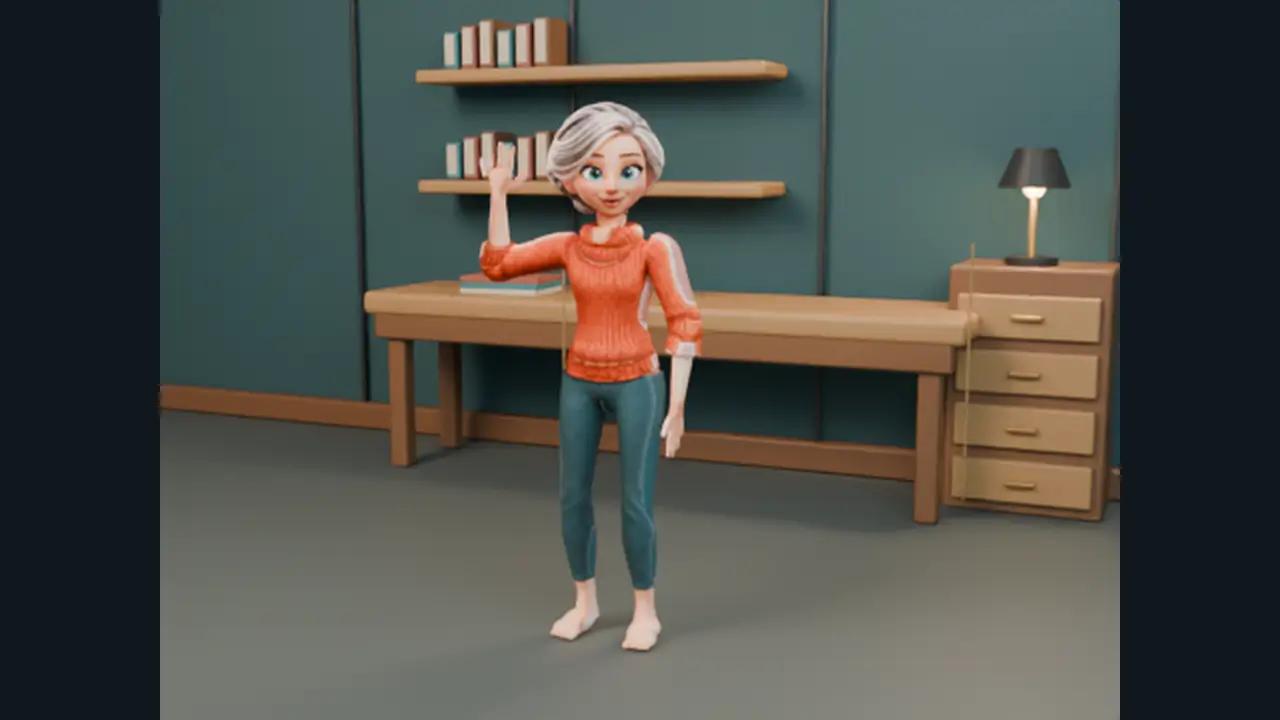
Her feet were walking, but she stayed in the middle of the frame. In this five-second greeting, we changed the camera first, then checked foot contact and the errors that remained once the character was applied.
Holding the camera made the approach visible
The first camera tracked her position. It moved forward as far as she did, so her approach barely registered on screen. We held the camera and its aim in place during the walk instead. She walked 52 centimetres forward within the scene, and the camera moved only after she'd finished.
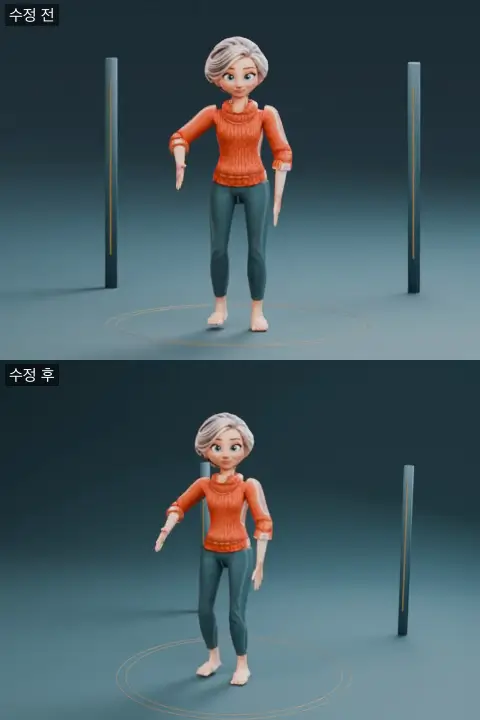
The first video above compares the original and revised previs. The second has the revised previs on top and the image-character test below it. The image below shows the walking and waving poses before and after the revisions.
Foot contact needed a separate check
Changing the camera doesn't fix floor contact by itself. We kept each supporting foot planted and timed the pelvis, torso, and opposite arm to the advancing leg. In Blender, we used leg IK with stretching disabled and a floor constraint.
We checked foot contact across 120 frames. The heel-to-toe roll still needs finer work. Making the approach visible and finishing the foot motion were separate checks.
The character test left errors in the hands and lips
In PixVerse V5.5 we used the revised previs for motion and a full-body reference image of the silver-haired character for appearance. The walking path and the right-hand wave came out broadly right. The details didn't: the fingers blurred as the hand rose, the hair volume and knit texture changed, and the initial sideways glance was weaker than in the original.
We compared the lips at about 2.96 seconds, when they should close for the final p sound. In the previs they closed. In the generated test they stayed open. The voice and music stayed on their original timeline. The separate lip-sync tool left its submit button disabled, so we didn't submit a correction job.
This character pass used 25 free credits, with no additional payment. We requested 360P, but the returned file was 640 by 480. For review we converted it to 480 by 360, and we recorded the requested resolution, the returned dimensions and the review dimensions separately.
Next, we plan to test the rising hand and the lip-closing sound in a short shot first. We'll check those results and the dimensions of the returned video before moving on to the next shot.